Historic SiteNashville, TN
Music Row
The historic Nashville district of studios, publishers, and label offices.
Why it matters
Music Row is the industry neighborhood behind the hits—walking it helps fans understand how songs moved from writers’ rooms to radio.
The story
Music Row didn't begin with a master plan. It grew around a handful of people who realized Nashville could become more than a place where country music was performed—it could become a place where the entire business of making records happened.
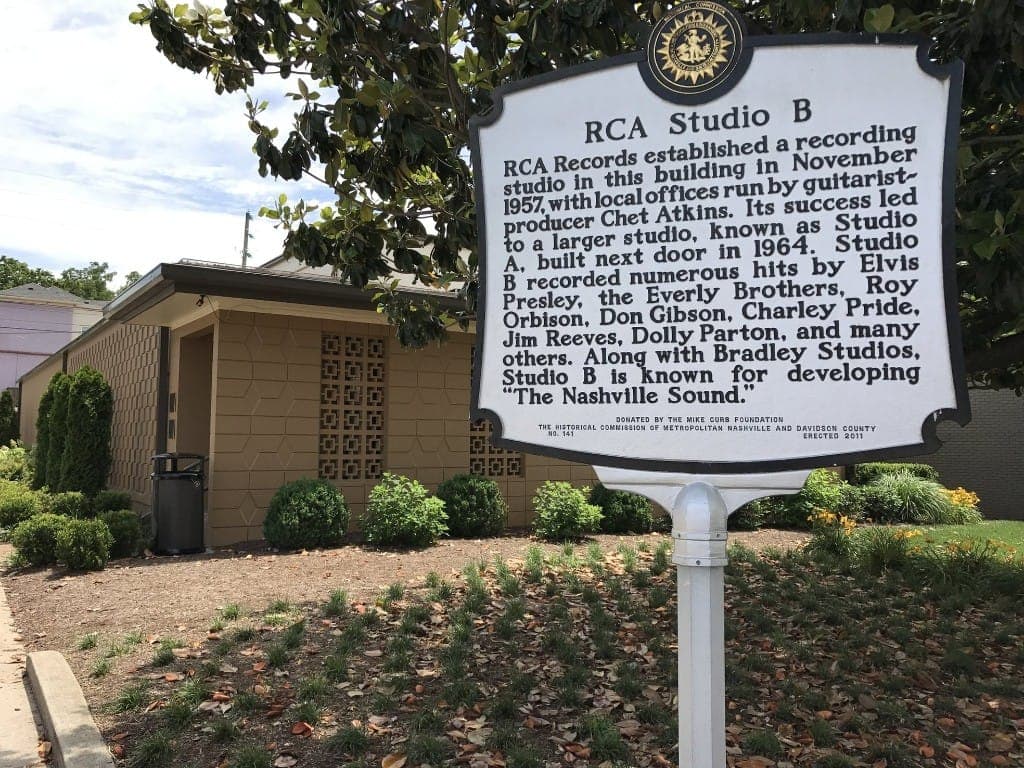
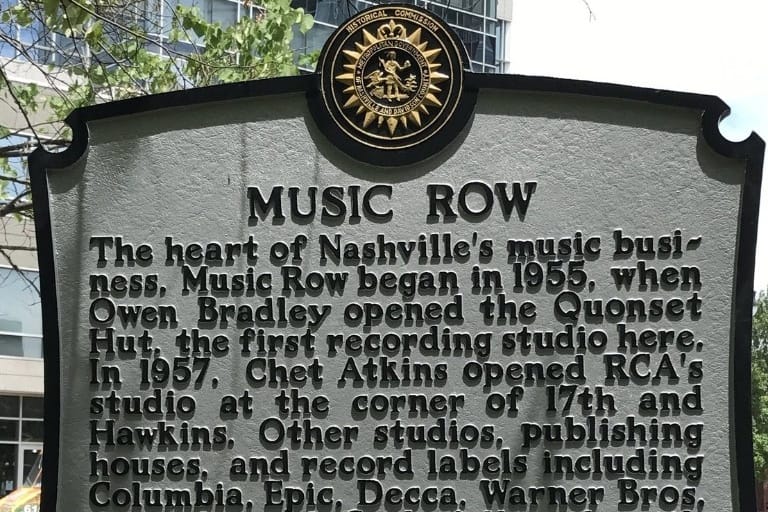
In 1955, brothers Owen and Harold Bradley established their studio on 16th Avenue South, adding the Quonset Hut that would become one of Nashville's most important recording rooms. RCA followed nearby in 1957 with the studio now known as RCA Studio B. Soon, record labels, publishing companies, producers, booking agencies, and other music businesses began filling the houses and offices along 16th and 17th Avenues.
Within these few blocks, songs moved from idea to finished record. A songwriter could meet with a publisher, musicians could walk into a studio, and a label could turn the resulting recording into a release—all within the same neighborhood. The concentration of talent and business helped Nashville develop an industry unlike almost anywhere else.
Some of the buildings have disappeared, and the neighborhood continues to change, but Music Row remains one of the clearest physical reminders of how Nashville became Music City. What looks like a collection of ordinary streets was, for decades, one of the most important pieces of music-industry infrastructure in America.
While you’re here
Best explored on foot or via neighborhood tours; many buildings are private; Street parking is available.
Keep exploring Nashville